IFRA categories
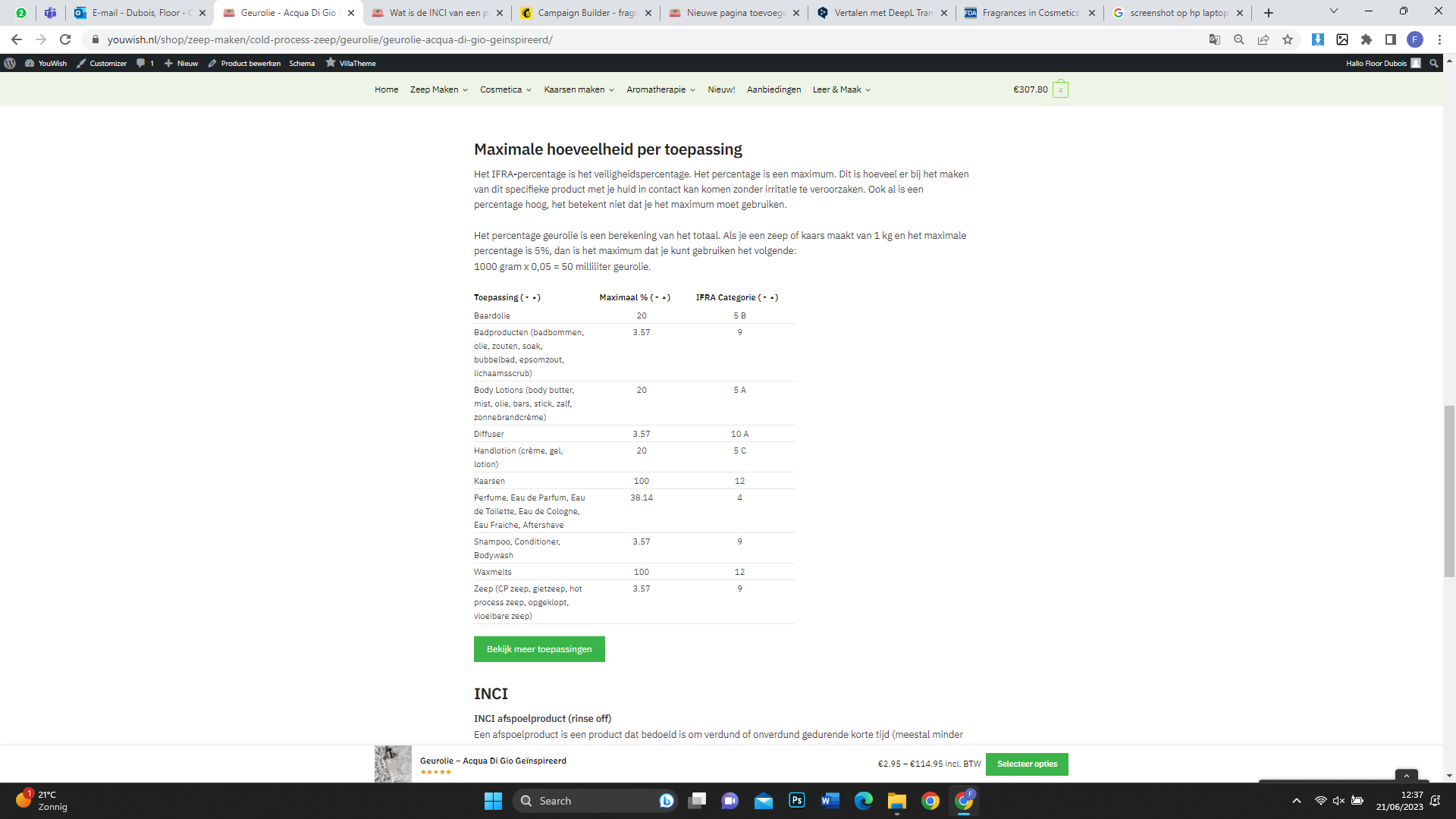
IFRA is divided into 12 product categories. The categories most used in the handmade industry are (9) Soap and bath bombs or rinse-off products, (9) Lotions and body butters or care products, and (12) candles. Using the IFRA documentation as a guide, you can now determine how much of a specific fragrance can be used in the product you are making.
At the bottom of the page, each fragrance oil contains an overview of the maximum percentage per category and a list of the categories.
Calculating with IFRA
The percentage of fragrance oil is a calculation of the total. If you make a soap or candle of 1 kg and the maximum percentage is 5%, then the maximum you can use is the following:
1000 grams x 0.05 = 50 milliliters of fragrance oil.
MSDS
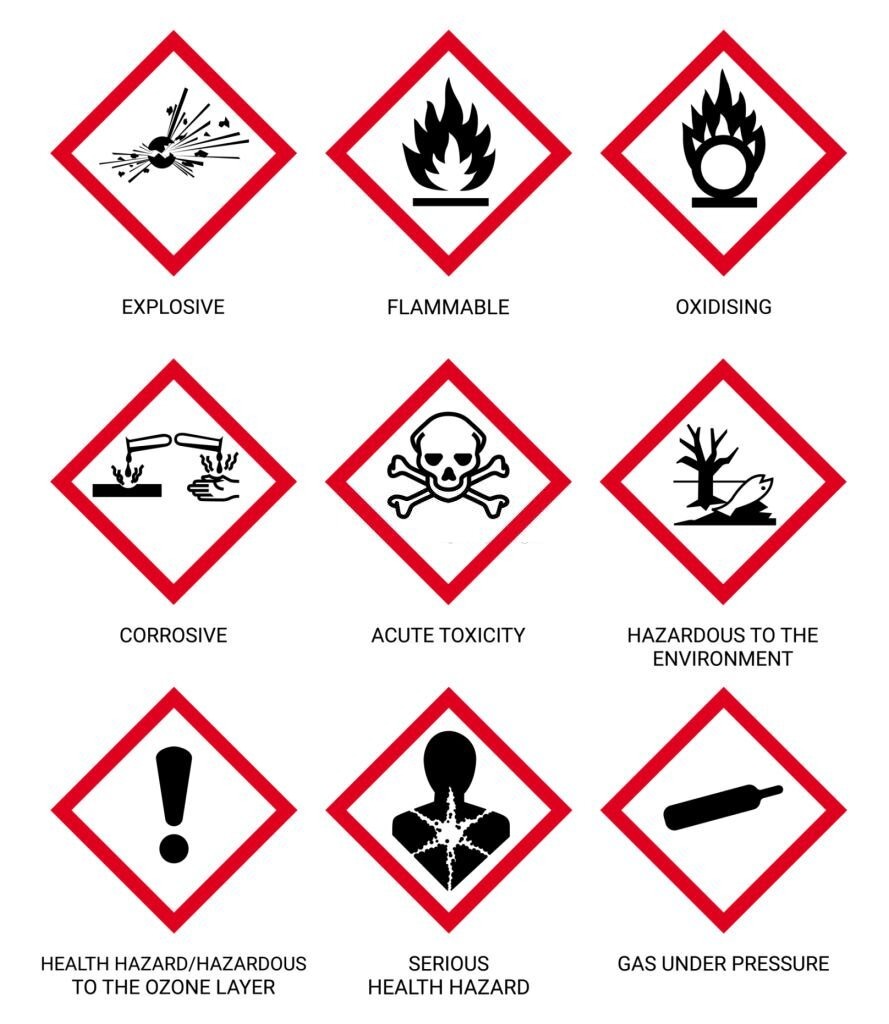
A Safety Data Sheet (MSDS) is a document containing information about potential hazards (health, fire, reactivity, and environment) and how to handle the product safely. In addition, the document contains information about use, storage, handling, and emergency procedures, all related to the product's hazards. MSDSs are prepared by the supplier or manufacturer of the material.
Always be aware of a product's hazards BEFORE you use it. It is recommended to consult an MSDS, compare the chemical name on your packaging with the name on the MSDS, know the hazards, understand the instructions for safe handling and storage, and know what to do in an emergency.
What information is included in the MSDS?
There are nine categories on an MSDS. These categories are specified in the Controlled Products Regulations and include:
1. Product information: product identification (name), names, addresses, and emergency telephone numbers of manufacturers and suppliers.
2. Hazardous ingredients
3. Physical data
4. Data regarding fire or explosion hazards
5. Reactivity data: information regarding the chemical instability of a product and the substances with which it may react.
6. Toxicological properties: health effects
7. Preventive measures
8. First aid measures
9. Preparation information: who is responsible for the preparation and date of preparation of the MSDS
What information is included in the MSDS?
There are nine categories on an MSDS. These categories are specified in the Controlled Products Regulations and include:
Product information: product identification (name), names, addresses, and emergency telephone numbers of manufacturers and suppliers.
Hazardous ingredients
Physical data
Data regarding fire or explosion hazards
Reactivity data: information regarding the chemical instability of a product and the substances with which it may react.
Toxicological properties: health effects
Preventive measures
First aid measures
Preparation information: who is responsible for the preparation and date of preparation of the MSDS
INCI
INCI stands for: International Nomenclature Cosmetic Ingredient. INCI was developed by the European and American cosmetics industry. INCI names are internationally standardized names for substances used in cosmetics.
You can determine the INCI name from the allergen documentation. The INCI consists of the following:
Leach-off limit in finished products: if > 0.01%, this must be stated on the ingredient list. Rinse-off products are, for example, soap, shampoo, etc. Products that you wash off your skin.
Leach-off limit for residue in finished products: If > 0.001%, this must be stated on the ingredient list. Leave-off would be loation, etc.
The name Parfum or Aroma
Rinse-off or not? INCI rinse-off product
A rinse-off product is a product intended to be applied to the hair or body, diluted or undiluted, for a short period of time (usually less than an hour), after which it is thoroughly rinsed off. Examples include shampoos, cleansers, conditioners, and hair removal products.
INCI rinse-off product: Perfume, Benzyl Benzoate, Linalool, D-Limonene, Butylphenyl Methylpropional, Benzyl Salicylate
INCI leave-on product
A leave-on product is intended to be applied to the skin and left on long enough to achieve the desired effect. Examples include hand and body lotions, sunscreens, and antiperspirants.
INCI leave-on product: Perfume, Benzyl Benzoate, Linalool, D-Limonene, Butylphenyl Methylpropional, Benzyl Salicylate